

Teeth Whitening Safety Guide
Does Teeth Whitening Cause Sensitivity? How to Whiten Safely
Wondering does teeth whitening cause sensitivity? Read our complete dentist guide on why whitening agents irritate tooth nerves and how to whiten sensitive teeth safely.
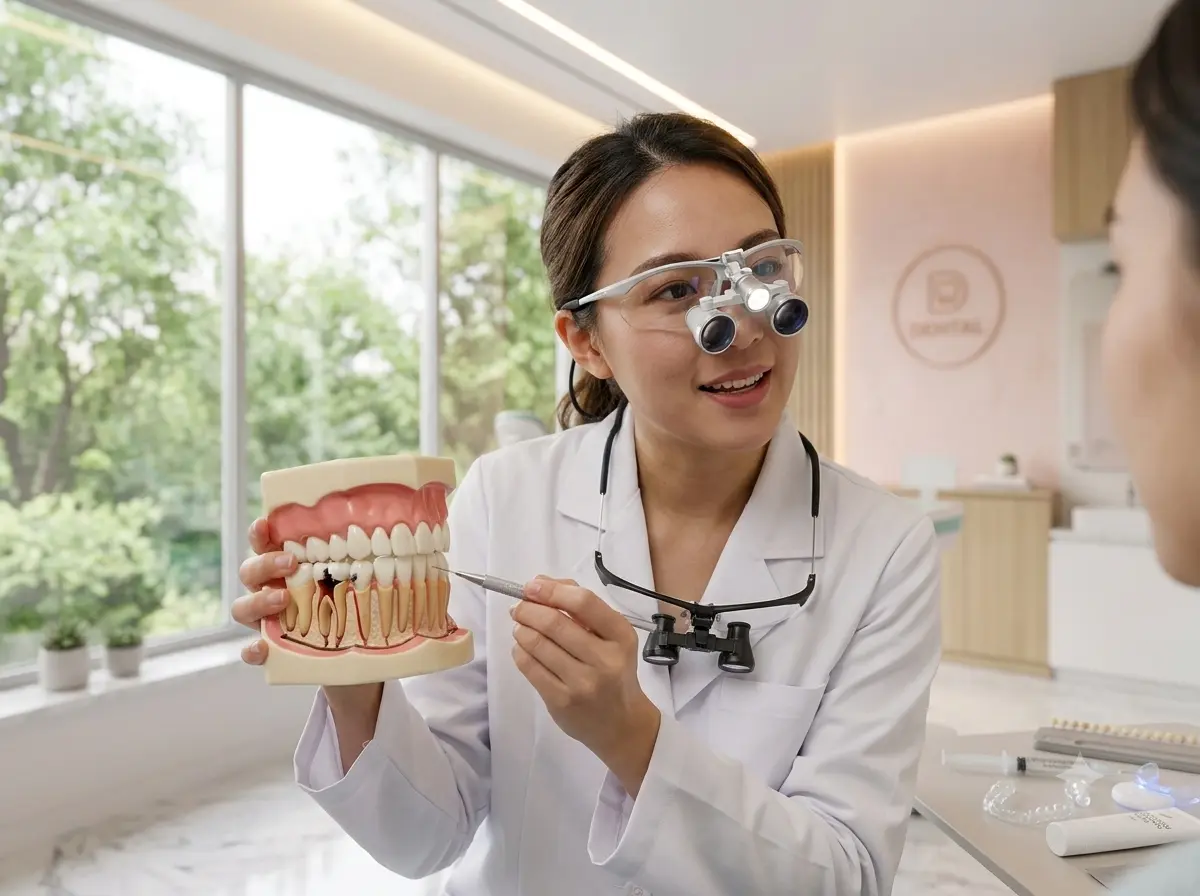
1. The Science: Why Does Teeth Whitening Cause Pain?
To understand why teeth whitening triggers sensitivity, it is helpful to look at the basic anatomy of a human tooth. A tooth consists of three primary layers: the outer enamel (which has no living nerves), the dentin layer (containing millions of microscopic channels called dentinal tubules), and the pulp (the living core with nerves).
Professional whitening systems use active bleaching agents like hydrogen peroxide or carbamide peroxide. These peroxide compounds are designed to pass through the porous enamel and reach the dentin. As the bleaching agent acts, it oxidizes the dark stains and temporarily removes water molecules from the tooth structure. This dehydration alters the fluid pressure within the dentinal tubules, stimulating the mechanoreceptors in the pulp nerves. This stimulation is perceived by your brain as a sharp, sudden discomfort or general tooth sensitivity. Once the treatment is complete, saliva naturally replenishes the tooth's moisture, and the enamel pores close, which is why whitening-induced sensitivity resolves naturally within 1 to 2 days.
2. Common Causes of Severe Sensitivity During Whitening
While mild, temporary sensitivity is normal, some patients experience severe discomfort due to pre-existing dental conditions that allow the bleaching gel to bypass the protective enamel shell and contact the dentin directly.
Gum Recession
Exposed root surfaces lack protective enamel, allowing whitening gel to contact raw dentin directly.
Enamel Wear
Teeth grinding (bruxism) or aggressive brushing creates micro-cracks and thins the enamel layer.
Active Cavities
Untreated cavities provide a direct pathway for the bleaching gel to leak into the pulp chamber.
3. How Professional Clinics Manage Sensitivity (E-E-A-T Standards)
Top-tier private dental clinics follow strict safety and desensitizing protocols to ensure a safe, comfortable treatment for patients prone to sensitivity.
Pre-Treatment Oral Exam: A certified dentist must examine your teeth and gums before any whitening treatment. The dentist will check for active decay, assess gum health, and identify exposed roots or areas of severe enamel wear that need to be avoided or covered during gel application.
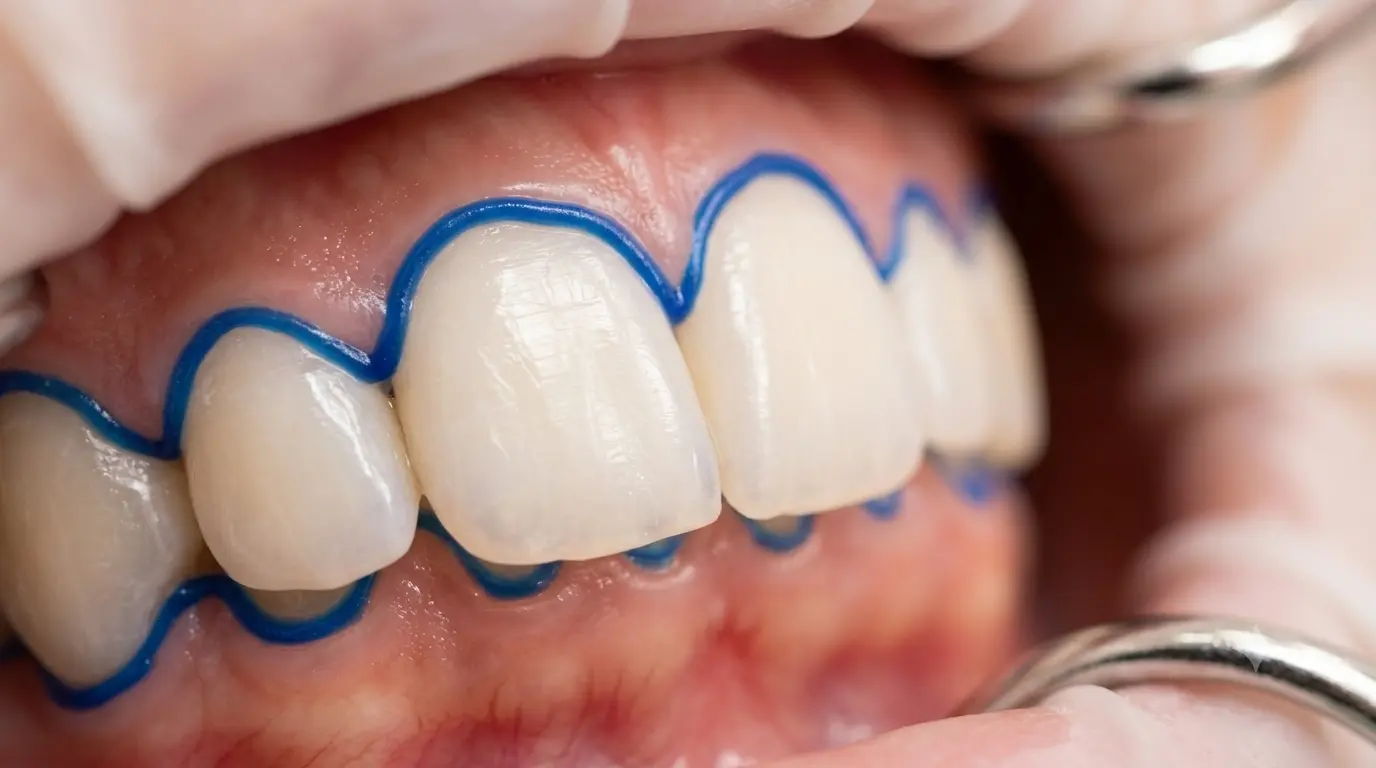
Light-Cured Resin Gum Barriers: During an in-office treatment, dentists apply a specialized, light-cured liquid resin barrier (gingival dam) along the gum line. Once cured, this barrier acts as a physical shield, completely blocking the bleaching gel from contacting your gums and soft tissues, eliminating the risk of chemical gum burns.
Clinical Desensitizers: Modern professional whitening systems incorporate active desensitizing agents like Potassium Nitrate (to calm nerve endings) and Sodium Fluoride (to block tubules) directly into the gel or apply them as a separate step before and after treatment.
4. Safe Whitening Strategies for Sensitive Teeth
If you have sensitive teeth, you can choose from several clinically proven strategies to whiten your smile safely:
| Feature | Dentist Custom Home Kit | In-Office LED (Zoom/Beyond) | Over-the-Counter Strips | Charcoal / Abrasive Paste |
|---|---|---|---|---|
| Sensitivity Risk | Low (Gradual & controllable) | Low to Moderate (Managed by dentist) | High (Uncontrolled exposure) | Very High (Scratches enamel) |
| Gum Protection | High (Custom-trimmed trays) | Excellent (Dentist-applied resin barrier) | Poor (Gel leaks onto gums easily) | None (Abrasive to gums) |
| Desensitizers | Often included in professional gel | Yes (Applied before & after treatment) | Rarely included | None |
| Treatment Control | Patient can pause or adjust usage | Dentist adjusts cycle times/intensity | None | None |
5. Step-by-Step Sensitive Teeth Whitening Protocol
To ensure a comfortable whitening experience, follow this timeline recommended by cosmetic dentists:
- 2 Weeks Before: Switch to a desensitizing toothpaste containing potassium nitrate and avoid acidic foods.
- During Treatment: Inform your dentist immediately if you feel any discomfort so they can adjust the cycles or gel concentration.
- 48 Hours After: Follow the White Diet, avoid extremely hot or ice-cold drinks, and continue sensitive toothpaste.
FAQ: Teeth Whitening & Sensitivity
Why do my teeth feel sensitive after whitening?
Sensitivity occurs because the bleaching agent temporarily opens the microscopic pores (tubules) in your enamel, allowing temperature changes and air to stimulate the nerves inside the tooth.
Does laser teeth whitening cause less sensitivity than LED?
It can. Laser whitening is often faster than LED whitening, meaning the bleaching gel has less contact time with your teeth, which can reduce the build-up of sensitivity.
How long does whitening sensitivity last?
For most patients, sensitivity is mild and resolves naturally within 24 to 48 hours as the teeth rehydrate and enamel pores close.
Can charcoal toothpaste whiten sensitive teeth?
No. Charcoal toothpastes are highly abrasive. They do not bleach the teeth but scrape away surface stains, which can wear down your enamel and make your teeth permanently more sensitive.
Want to Compare Teeth Whitening Options for Your Smile?
Your ideal whitening option depends on your tooth shade, sensitivity, gum health and whether you have existing dental restorations. Contact Beauty Brace Dental in Johor Bahru to ask about consultation, whitening options and appointment availability.