

Dental Hygiene & Aesthetics
Can Scaling and Polishing Whiten Your Teeth? (Scaling vs Whitening Explained)
Wondering can scaling and polishing whiten teeth? Read our dentist guide explaining the structural differences between scaling hygiene and chemical teeth whitening.
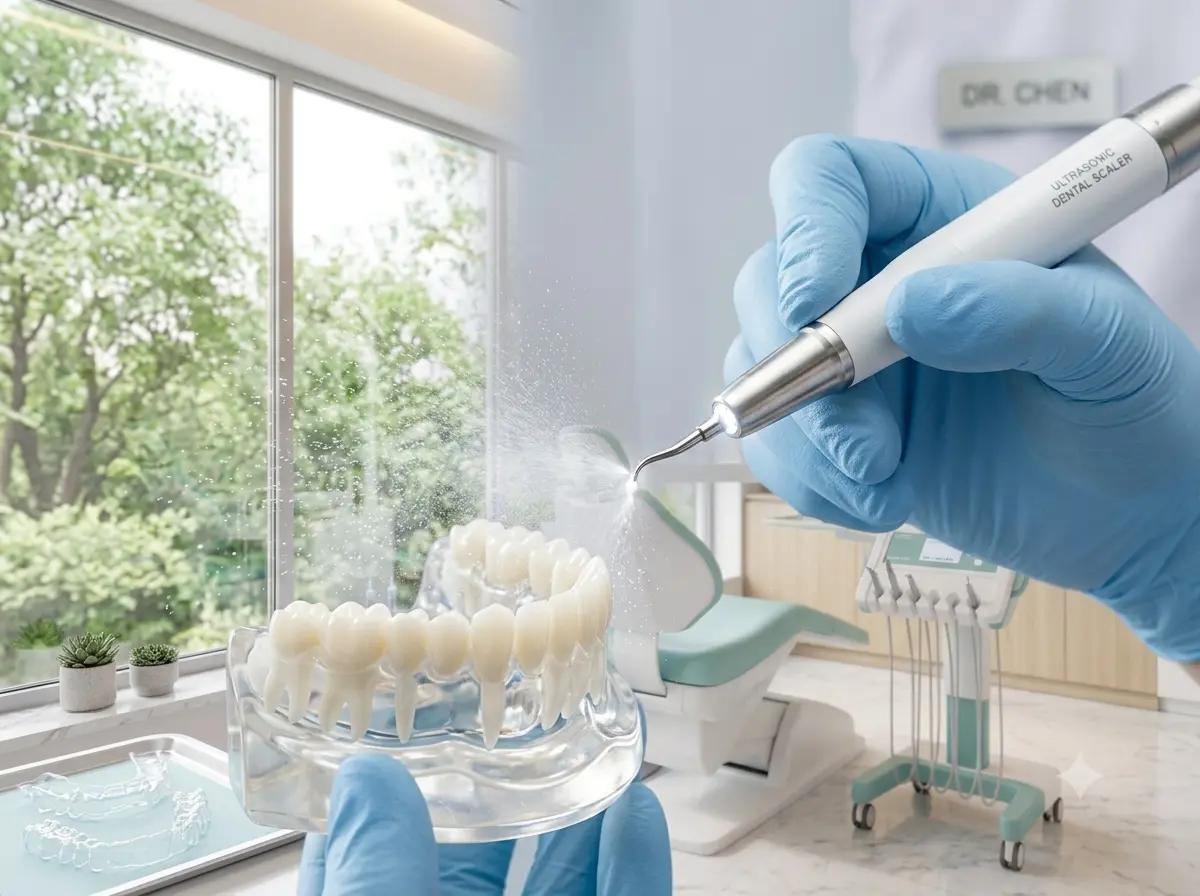
1. What is Dental Scaling and Polishing?
Dental scaling and polishing is a preventive, health-focused hygiene treatment. Its primary purpose is to protect your gums, prevent tooth decay, and maintain general oral health.
The Scaling Process: During a scaling procedure, the dentist or dental hygienist removes soft plaque and hard tartar (calculus) deposits that have accumulated on the tooth surfaces and beneath the gum line. Modern clinics use ultrasonic scalers that shatter and wash away hard tartar blocks using micro-vibrations and water spray without damaging your enamel. Tartar is calcified bacterial plaque that cannot be brushed off at home; if left untreated, it causes gingivitis, leading to bleeding, bone loss, and periodontitis.
The Polishing Process: Once the tartar is removed, the dentist performs polishing to smooth the tooth surfaces and remove light surface stains. Using a rotating rubber cup paired with a grit-based prophylactic paste, the dentist gently polishes the enamel. Some clinics use air-polishing, which sprays pressurized water, air, and fine powder to clear away stubborn coffee, tea, and smoking stains from tight spaces. This leaves your teeth feeling smooth and clean.
2. What is Professional Teeth Whitening?
Unlike scaling, professional teeth whitening is a purely cosmetic treatment designed to alter the biological color of your teeth. Teeth whitening works by penetrating beneath the enamel surface to target internal stains.
Active Peroxide
Professional whitening systems use active bleaching gels (hydrogen or carbamide peroxide).
Chemical Oxidation
The peroxide passes through porous enamel to reach dentin, breaking down organic stain carbon rings.
Light Activation
LED or Laser systems accelerate chemical oxidation, achieving major shade improvements in one visit.
3. Key Differences: Scaling vs. Whitening
Understanding the distinct mechanisms of these treatments helps align your expectations with the results. Scaling is a health necessity, while whitening is an aesthetic choice.
| Comparison Metric | Scaling and Polishing | Professional Teeth Whitening |
|---|---|---|
| Primary Goal | Medical (Oral health & hygiene) | Cosmetic (Aesthetic enhancement) |
| How it Works | Mechanical scraping and abrasive polishing | Chemical bleaching via oxidation |
| Target Debris | External tartar, plaque, and coffee/tea/tobacco stains | Internal yellowing, aging stains, and enamel discoloration |
| Color Impact | Restores your teeth to their baseline natural shade | Lightens teeth beyond their baseline natural shade |
| Gum Impact | Promotes gum healing and reduces inflammation | Can cause temporary gum irritation (requires protective barrier) |
| Frequency | Recommended every 6 months for hygiene maintenance | Performed every 1 to 2 years or maintained with home kits |
4. Why Scaling is a Mandatory Prerequisite for Whitening
If you plan to whiten your teeth, you should never bypass a scaling and polishing session. Professional cosmetic clinics will always recommend or require a cleaning before applying whitening gel.
- Prevent Uneven Bleaching: Tartar blocks the bleaching gel. If you whiten over tartar, removing it later leaves dark spots.
- Protect Your Gums: Bleaching gel on inflamed gums causes severe bleeding and chemical burns. Scaling cures gingivitis.
- Identify Active Decay: Cleaning clears dental debris to let the dentist find and fill any active cavities first.
FAQ: Scaling vs. Whitening
Will scaling make my teeth look whiter?
If you have heavy coffee, tea, or tobacco stains, scaling and polishing will make a visible difference by removing those dark surface layers. However, it will only restore your teeth to their original baseline shade; it will not bleach them lighter.
Why are my teeth still yellow after scaling?
If your teeth still look yellow after a scaling session, the discoloration is intrinsic—meaning it is located inside the dentin and enamel layers. This is common due to aging, genetics, or past medication use, and can only be corrected with chemical teeth whitening or veneers.
Does scaling hurt?
Most patients experience only mild vibrations and cold sensitivity from the water spray. If you have sensitive teeth or heavy tartar, the dentist can apply local numbing gel to ensure comfort.
How soon after scaling can I get teeth whitening?
If your gums are healthy, whitening can often be performed during the same appointment immediately after scaling. However, if your gums are inflamed and bleed during scaling, the dentist may advise waiting 3 to 7 days for your gums to heal first.
Want to Compare Teeth Whitening Options for Your Smile?
Your ideal whitening option depends on your tooth shade, sensitivity, gum health and whether you have existing dental restorations. Contact Beauty Brace Dental in Johor Bahru to ask about consultation, whitening options and appointment availability.