
Myth-Busting Dental Guide
Does Charcoal Teeth Whitening Actually Work? A Dentist's Verdict
Activated charcoal toothpaste has gone viral, but does it actually whiten your teeth? Discover the scientific verdict on charcoal whitening, its erosion risks to tooth enamel, and safe alternatives in Johor Bahru.
1. Direct Answer: Does Charcoal Whitening Work?
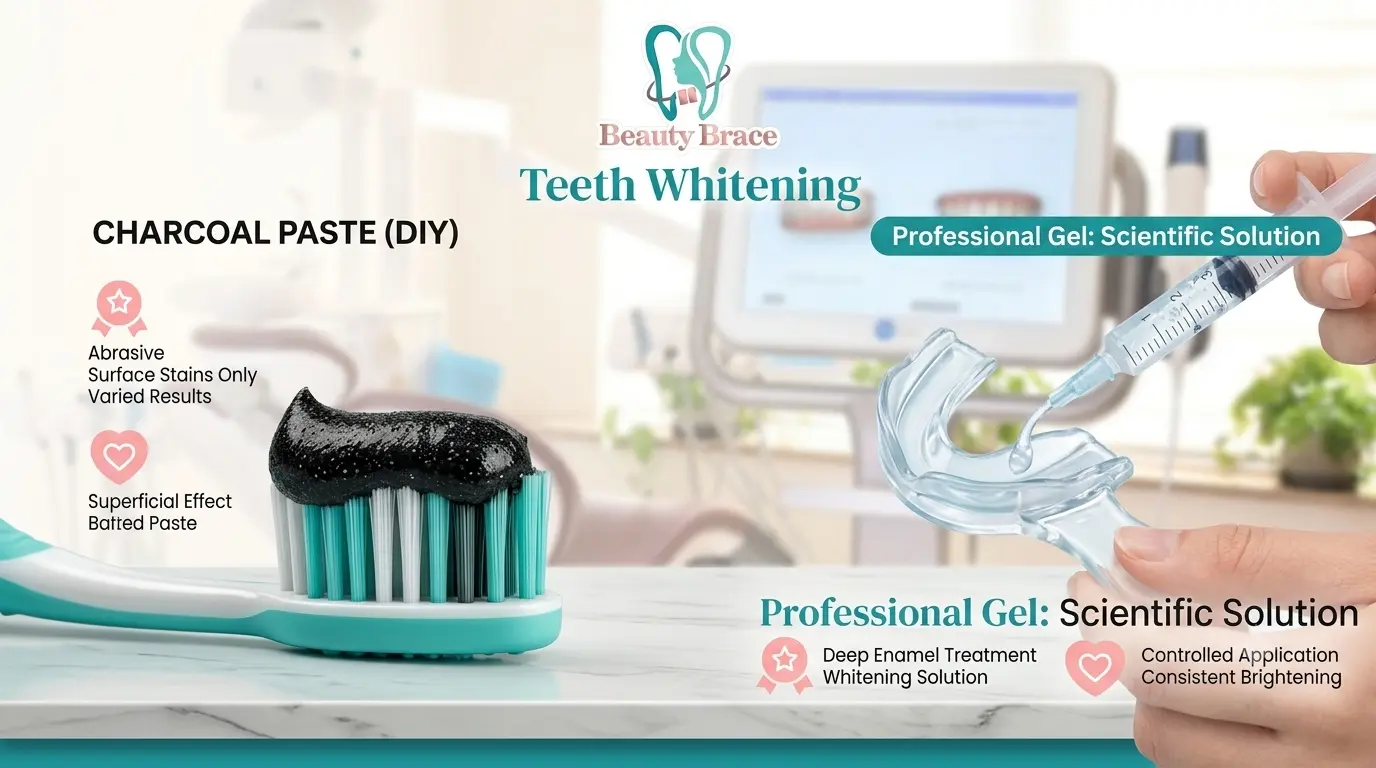
No, activated charcoal does not actually whiten teeth. While charcoal toothpaste can scrub away mild surface stains (extrinsic discoloration) due to its high abrasiveness, it contains zero active bleaching agents (like hydrogen peroxide) and cannot change the natural intrinsic color of your enamel.
Furthermore, dental research shows that daily scrubbing with charcoal powder acts like sandpaper. Over time, it wears down the protective outer enamel, exposing the underlying yellowish dentin layer—ironically making your teeth look darker and significantly more sensitive.
2. The Science: Why People Believe Charcoal Whitens Teeth
Activated charcoal is a porous, fine black powder treated with oxygen to increase its surface area. In emergency medicine, it is used to absorb toxins in the stomach. However, when applied to dentistry, social media influencers often confuse adsorption of surface particles with chemical enamel bleaching.
Surface Stain Scrubbing
Charcoal particles physically scrape away coffee, tea, and tobacco film from the tooth surface, creating a temporary optical illusion of cleanliness.
Zero Bleaching Power
Unlike professional dental peroxide gels, charcoal cannot penetrate enamel pores to oxidise internal pigment molecules.
Lack of Fluoride Protection
Most commercial charcoal pastes omit fluoride, leaving enamel defenseless against acid attacks and tooth decay.
3. The Dental Risks: Permanent Enamel Erosion
Tooth enamel is the hardest tissue in the human body, but once eroded, it cannot regenerate. According to the Relative Dentin Abrasivity (RDA) index, charcoal pastes frequently exceed safe RDA limits.
4. Comparison: Charcoal Paste vs Professional In-Office Whitening
Before buying over-the-counter charcoal products, review how they compare chemically against clinical dental whitening:
| Evaluation Factor | Charcoal Toothpaste / Powder | Professional LED In-Office Whitening |
|---|---|---|
| Active Ingredient | Activated Charcoal Powder (Abrasive) | Medical-grade Hydrogen / Carbamide Peroxide |
| Action Mechanism | Mechanical surface scraping | Oxygen breakdown of deep enamel pigments |
| Shade Improvement | 0 shades (Only removes surface dirt) | 3 to 8 shades lighter in 1 session |
| Enamel Safety | High risk of enamel scratching & wear | 100% enamel safe with gingival protection |
| Gum Protection | None (Can irritate gum tissues) | Light-cured resin dam applied by dentist |
| Longevity | Temporary surface illusion | 6 to 24 months with care |
5. Safe & Proven Whitening Alternatives at Beauty Brace Dental
If you want a genuinely brighter, healthier smile in Johor Bahru without risking enamel damage, professional dental care is the answer:
1. Pre-Whitening Scaling & Polishing: Removes stubborn plaque and calculus safely using ultrasonic scalers before bleaching. (Learn more: Scaling vs Whitening Guide).
2. In-Office LED Whitening: Fast, dentist-monitored treatment taking 60 minutes. Check our complete JB Whitening Price Guide for packages.
3. Custom Dentist Take-Home Trays: Custom molded trays ensuring gel stays on teeth and away from gums.
Frequently Asked Questions About Charcoal Whitening
Can charcoal toothpaste damage dental fillings or veneers?
Yes. Charcoal particles can scratch the smooth polished surface of composite fillings, porcelain veneers, and crowns, causing them to lose their shine and absorb dark food stains faster.
How often can I safely use charcoal toothpaste?
Dentists recommend avoiding daily use completely. If used at all, limit to once every 2 weeks as a gentle stain-remover, followed by standard fluoride toothpaste.
Why do my teeth look yellow after using charcoal for a month?
Scrubbing with charcoal thins your outer white enamel layer. As enamel gets thinner, the naturally yellow dentin underneath shows through more prominently.
Achieve a Brighter, Enamel-Safe Smile Today
Don't risk permanent enamel erosion with unproven internet hacks. Book a professional consultation with Beauty Brace Dental near Eco Botanic & Bukit Indah, Johor Bahru.